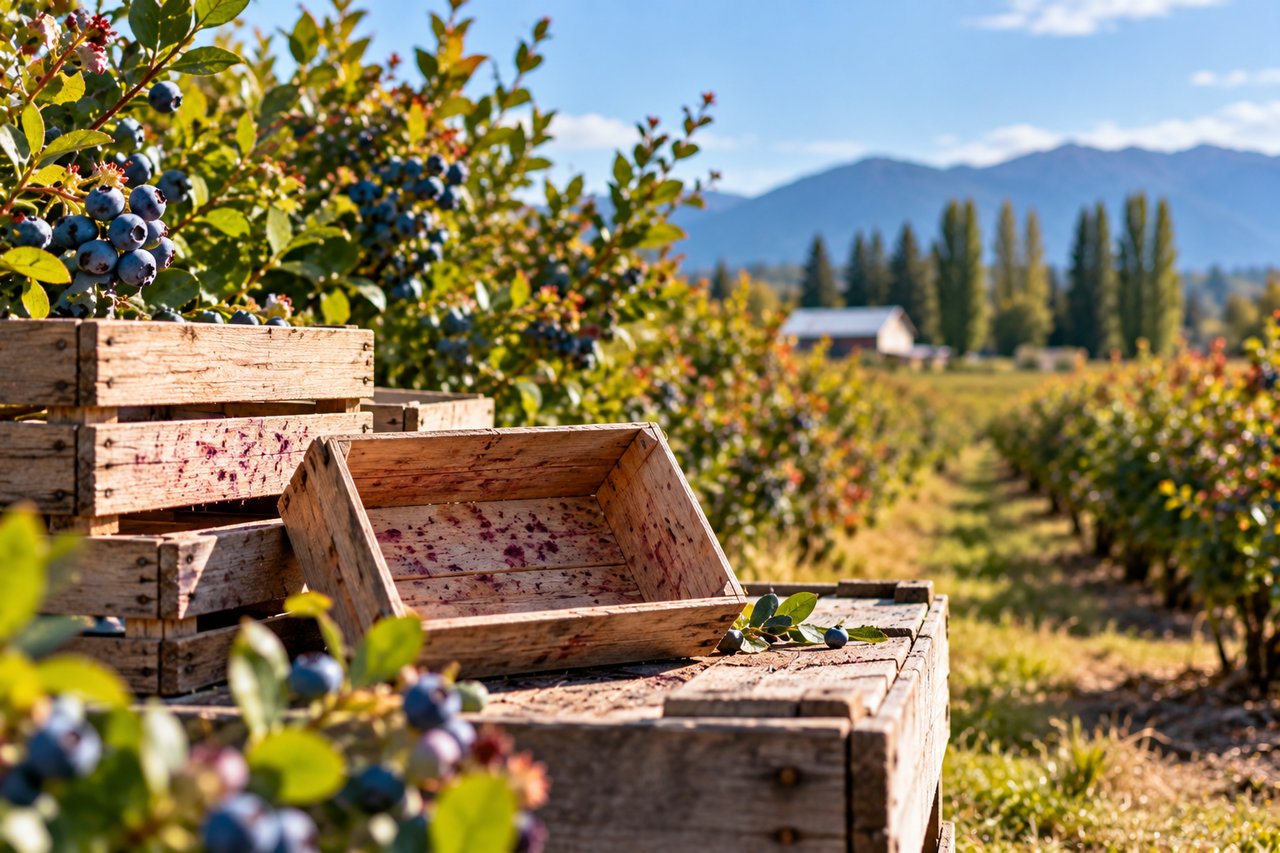
Drive past Bow Hill Road this week and the u-pick lanes are empty. The gate that stood open every Friday, Saturday, and Sunday through August is closed for the season, the bushes picked down to whatever the birds want. If you judged Bow and Edison by that one field, you would think the season had ended and the town along with it.
It hasn't. The farm store at Bow Hill Blueberries is still running its summer hours through September 13, selling frozen berries from this year's harvest, juice, jam, and the pickled blueberries the farm has become known for. The picking is over. The business isn't. That gap between the two is the actual story of this stretch of Chuckanut Drive in late summer, and it says more about how the town works than any list of restaurants would.
The Farm Store Outlasts the Field
The u-pick season at Bow Hill only ever ran three days a week in August, Friday through Sunday, with the last groups let into the rows around 4 p.m. Once the bushes are done for the year, the store doesn't close with them. It shifts to selling what's already frozen and shelf-stable, on a slower clock, until fall hours take over after September 13.
That two-step transition, harvest first, then inventory, is the same pattern you see across the whole food corridor between Bow and Edison. Nothing here runs on a single switch. Everything downshifts in stages, and the stage you catch it in depends on when you show up.
A Two-Block Town That Keeps Its Own Hours
Tweets Café sits on Cains Court and takes cash, check, or Venmo. Nothing else. It's open Friday through Sunday and has built a reputation strong enough that people drive up from Seattle specifically for it. Right next door, Mariposa Taqueria is run by the same two owners, Charles and David, as a backup for the line that inevitably forms at Tweets.
Breadfarm doesn't have a dining room at all. You order at a walk-up window, and if you want something specific, you call ahead or get there early, because the bread sells out. Slough Food, a few doors down, runs its gourmet counter and communal trestle tables on a schedule that closes earlier on weekdays and stretches longer on weekends.
None of this reads as customer-friendly if you're comparing it to a chain restaurant with a drive-through. A cash-only café that's open three days a week has its own rhythm. That's part of what makes a town that gets written up in national food coverage still feel like a town and not a destination.
What Fills the Calendar Once the Day-Trippers Thin Out
The clearest evidence that Bow and Edison run on a local clock, not a tourist one, is what's actually scheduled at Terramar Brewstillery once August traffic starts to fade.
Terramar's Speakeasy, the 21-and-up side of the brewstillery, runs live piano music every Friday evening, a rotating lineup of local pianists playing from 6 to 8 p.m. Saturdays bring acoustic sets from local acts. On the third Thursday of the month, there's trivia night hosted by Beth Olsen, starting promptly at 6 p.m.
Terramarkets are the seasonal gatherings Terramar holds in its Back 40, where local makers, farms, and musicians set up on the hillside with views back toward the mountains. And this summer's Summer Sounds Series paired a monthly music night with fundraising for a different local nonprofit each time. July's beneficiary was Skagit Gleaners, the organization that rescues and redistributes food across Skagit County.
The Building Under the Speakeasy
Part of what makes Terramar's calendar feel earned rather than curated for Instagram is the building it happens in. The property sits in the oxbow of the Edison Slough and has been, at different points, a slaughterhouse and later a sawmill before Chris and Jen Barker converted it into a brewery, distillery, and pizza kitchen. The Speakeasy inside keeps a classic movie theme, a detail traced back to Chris Barker's years working in film before he settled in Skagit County. It's the kind of history that only shows up if you're already standing in the room, not something a passing weekend visitor would piece together from a menu.
What This Means If You Live Here Now
The version of Bow and Edison that shows up in travel writing is the one built for a single afternoon: drive the scenic byway, stop for bread, buy some cheese, maybe catch the tail end of blueberry season, and head home. That version isn't wrong, but it's incomplete, and late August is exactly when the gap between it and the resident's version opens widest.
Right now, the farm store at Bow Hill is still stocked but the field is closed. The food trail is running its normal weekend hours, cash in hand. Terramar's fall calendar of piano nights, trivia, and Terramarkets is the same one that will carry the town through the quieter months, long after the tulip crowds and the boat traffic on Chuckanut Drive have moved on. Visitors may encounter that calendar while passing through at the right hour.
If you already live along this stretch between Bow Hill Road and the slough, you don't need a guide to tell you Tweets is cash only or that the bread sells out by early afternoon. What's worth knowing is that the town's actual social calendar, the one built to last past Labor Day, is only getting started as the tourist season winds down. September in Bow and Edison isn't the quiet after the rush. It's the town settling into its fall rhythm.
Curious what a home in this stretch of the Skagit Valley is actually worth, or what it takes to buy into a community that keeps its own hours? Taby Perron and the team at The Groesbeck Group know Bow and Edison the way locals do, not the way a weekend guide does, and they're ready to talk through what that means for your next move.